
Email from a Park: HF Winlink with a USDX and a Toughbook
/
There is something deeply satisfying about sitting on a park bench, rolling out a clothesline, and sending email 506 kilometres across the country using a radio that fits in your shirt pocket.
That is exactly what I did today at Googong, near the London Brigade Arch, after a morning hike. The kit was minimal. The result was not.
The Setup
The radio is a USDX, one of those remarkable little Chinese HF transceivers that the amateur radio community has embraced with enthusiasm. It covers 80, 40, 20, 15 and 10 metres, runs digital modes natively, and costs a fraction of what any name-brand rig would set you back. Paired with it was an AIOC, an All-In-One Cable that presents as a USB-C sound card with a K-style connector on the other end. No CAT control, no complicated interface boxes. Just audio in, audio out, and VOX handling the transmit switching.
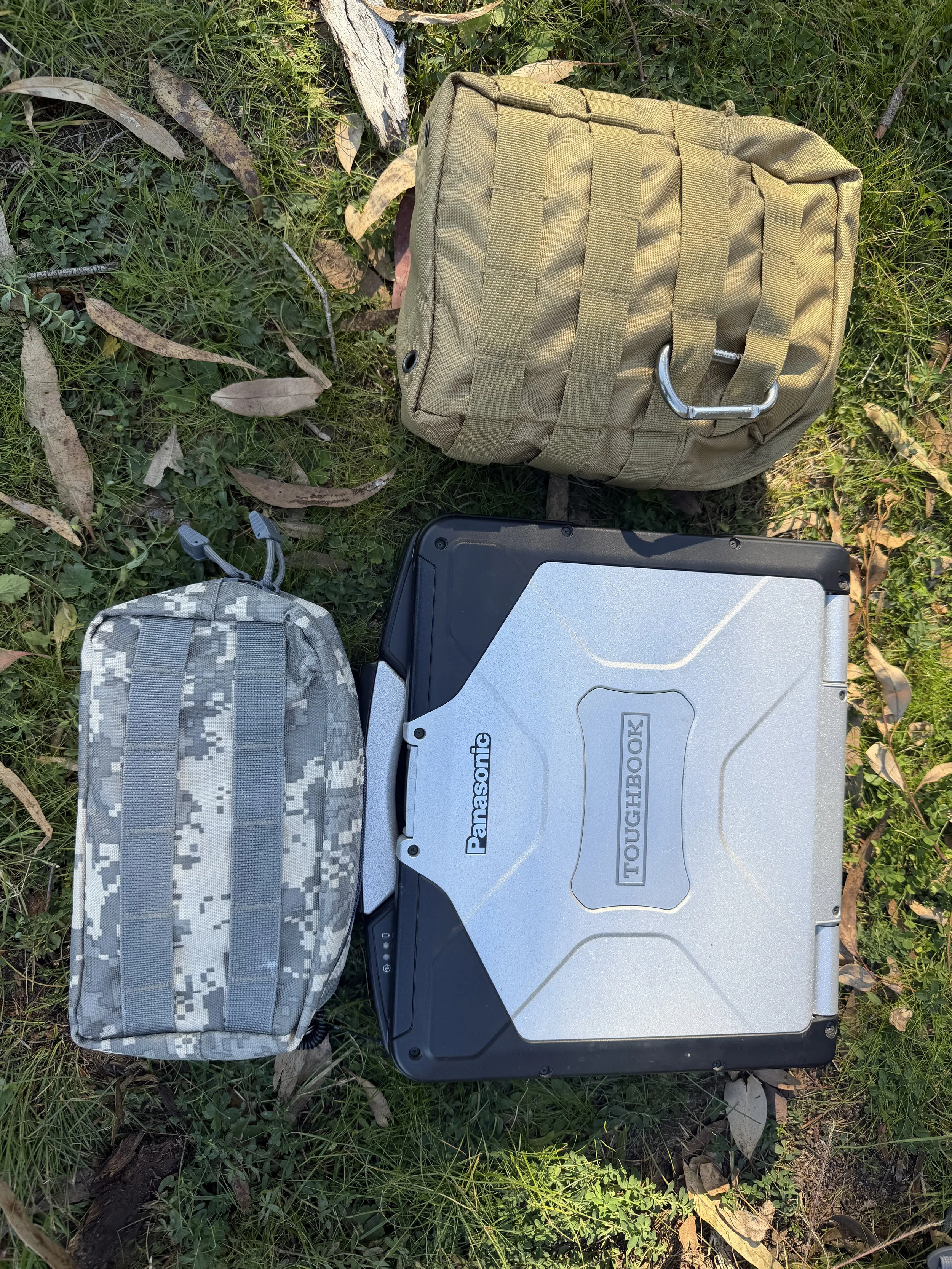
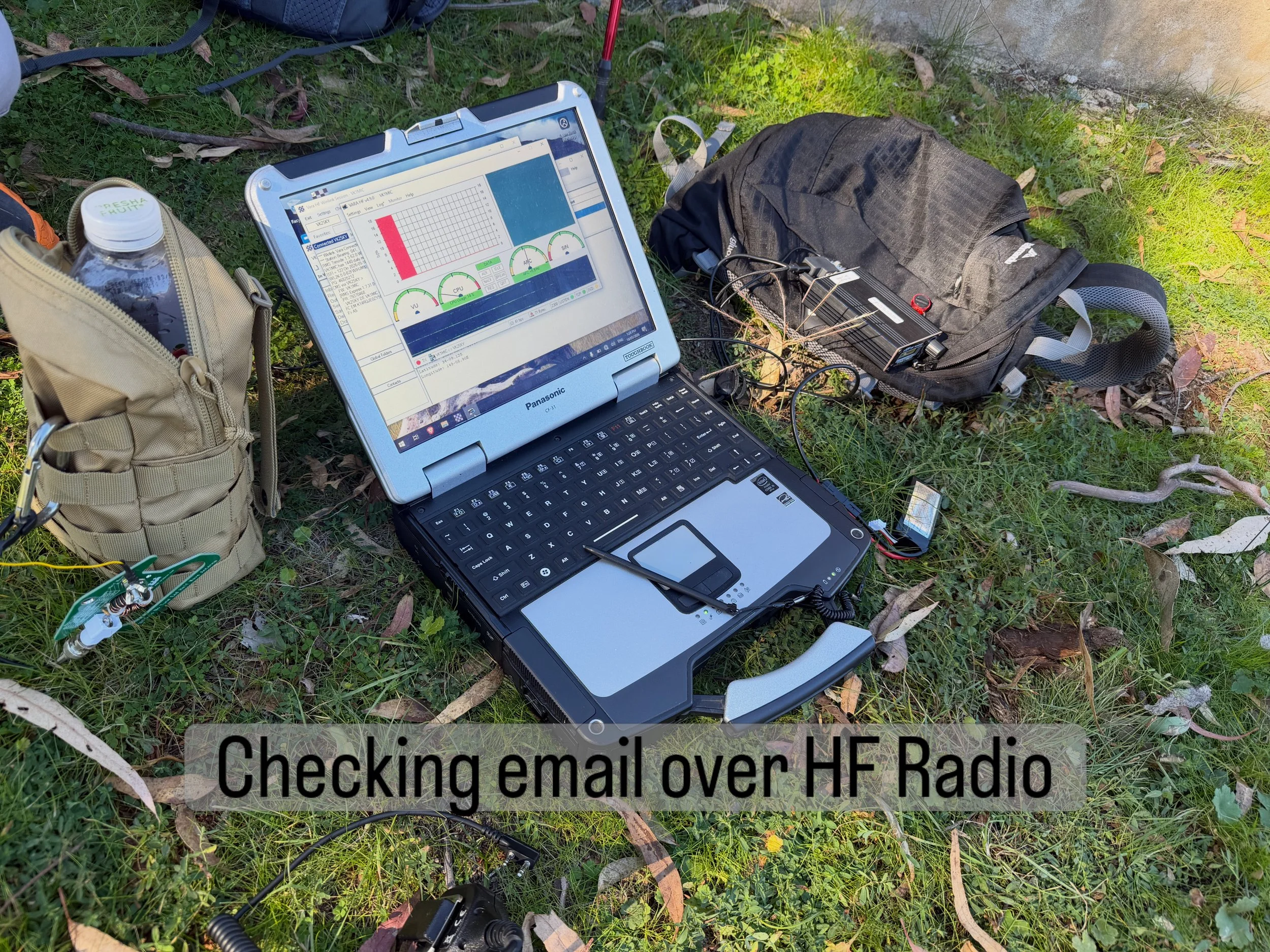
The laptop is my new-to-me Panasonic Toughbook CF-31 Mk5. Rugged, capable, and perfectly at home on a park bench after a hike.
The antenna is my favourite kind: invisible until you need it. It is a multiband wire antenna covering 80, 40, 20, 15 and 10 metres, wound up inside a roll-up clothesline container. The whole thing lives coiled up and ready to go. Rolling it out took about ninety seconds. That is the full antenna deployment time. Ninety seconds.
The Contact
Sitting on 40 metres at 7 MHz, VARA HF connected to a Winlink gateway in Melbourne. The path was 506 kilometres. The mode was digital. The result was a clean exchange of email, completely off any internet infrastructure at my end.
Winlink is a store-and-forward email system used extensively in emergency communications. VARA HF is a high-performance soundcard mode that squeezes remarkable throughput out of modest signal levels. Together they are a genuinely capable combination for portable and field operations, and today they performed without complaint.
Why This Matters
This was not a technical exercise for its own sake. It was a demonstration of what lightweight, low-cost kit can actually do in the field.
The USDX gets dismissed in some circles because it is inexpensive and Chinese-made. That dismissal is unwarranted. Today it provided a reliable digital HF link over 506 kilometres of Australian landscape, powered from a USB port, driven by a sound card interface that cost less than a decent lunch. The Toughbook gave me a rugged, field-ready computing platform that does not require careful handling or a padded case.
The clothesline antenna continues to be one of the best ideas in my kit bag. Multiband coverage, instant deployment, and it takes up almost no space. If you have not built or bought one, it is worth your time.
What Comes Next
This was a proof of concept that exceeded expectations. Lightweight HF capability is going with me on more trips. Whether that is day hikes, camping, or supporting emergency operations in areas with no infrastructure, the combination of a capable digital HF radio, a simple wire antenna, and a rugged laptop is a genuinely useful toolkit.
Portable does not mean compromised. Today proved that.
73 de VK1MIC