PortTakPi v2 -- Building a Portable TAK Server with AIS, ADS-B, and Real-Time Situational Awareness

A field-deployable Raspberry Pi 4 TAK server with dual SDR receivers, live maritime and aviation tracking, and Node-RED CoT pipelines feeding OpenTAK Server.
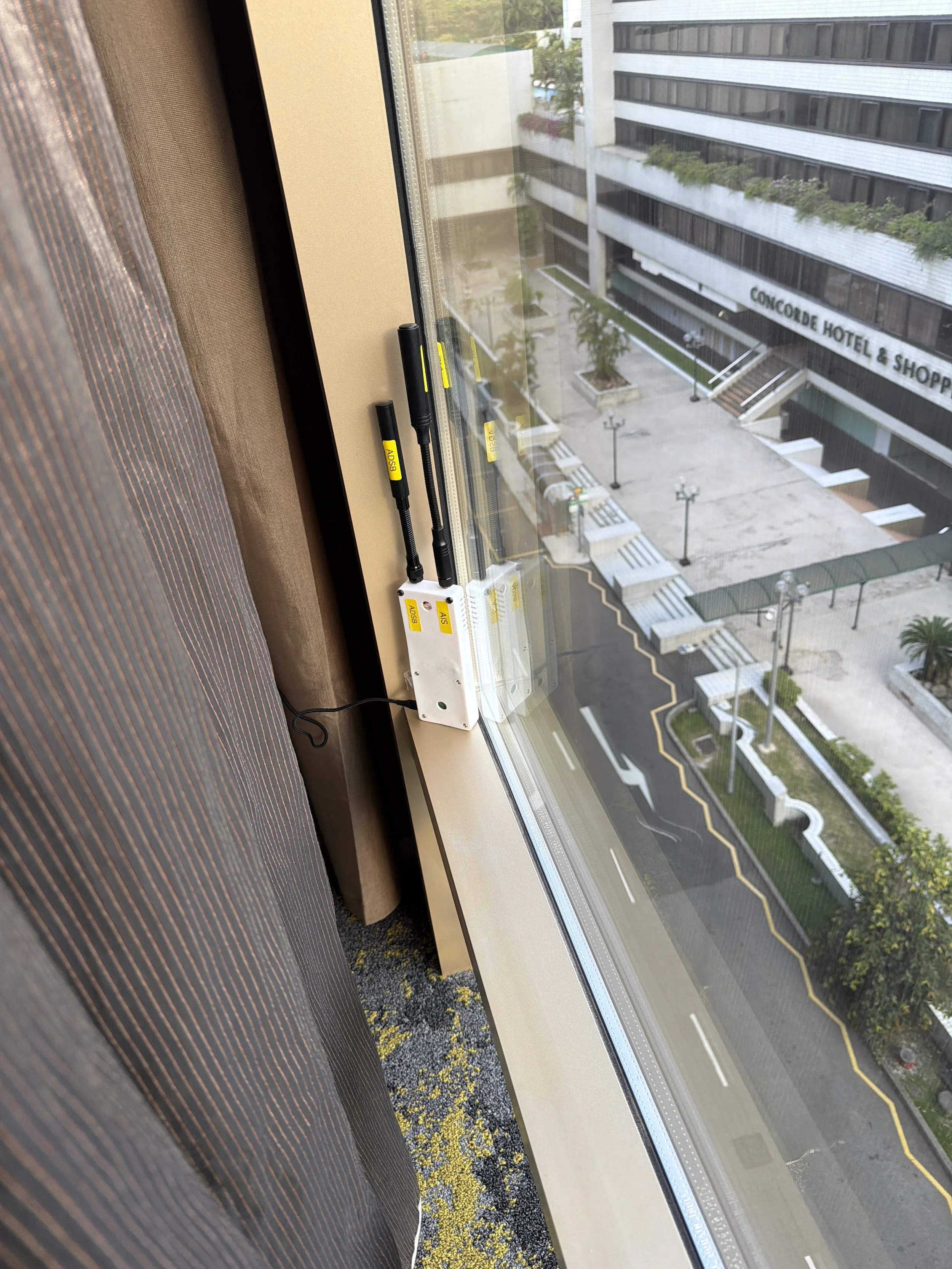
Background

This is version two of my portable TAK (Team Awareness Kit) server -- a self-contained situational awareness node that I can deploy in the field, at an incident, or at a remote location without any dependency on existing infrastructure. The goal is a box that boots up, connects its antennas, and starts pushing live AIS vessel tracks and ADS-B aircraft positions into TAK clients on the local network, all without touching a keyboard after initial setup.

Version one proved the concept. Version two tightens the architecture, adds a proper combined web UI for monitoring, and locks in the autostart and resilience behaviour that you actually need when you are relying on it operationally.

Hardware

The build is intentionally compact and rugged:

  • Raspberry Pi 4 (4GB) -- the compute platform. Plenty of headroom for running OpenTAK Server, two SDR decoders, Node-RED, and gpsd simultaneously without breaking a sweat. The RPi4 is a known quantity in this kind of deployment -- well supported, widely available, and the USB 3.0 ports handle the SDR dongles without USB bandwidth issues.

  • 2x NooElec NESDR Nano 3 -- these are the smallest RTL-SDR dongles available and they are ideal for a portable build. One is dedicated to ADS-B on 1090 MHz, the other handles AIS on 161.975/162.025 MHz. Each dongle was pre-programmed with a unique serial number -- 000001090 for the ADS-B dongle and 000000160 for the AIS dongle -- so the software can identify them deterministically regardless of which USB port they are plugged into.

  • uBlox USB GPS -- a stripped-down uBlox GPS module, heat-shrink covered to protect the PCB, connected via USB. This feeds gpsd and provides position stamping for AIS-catcher's web UI, Node-RED flows, and any TAK location services that need a receiver position.

The whole lot runs off a USB-C power source. In the field that is typically a battery bank or vehicle power via a USB-C PD adapter.

Software Stack

The software stack sits on a Raspberry Pi OS Lite base. No desktop environment -- everything is headless and managed via SSH over WireGuard when remote, or directly on the LAN when deployed locally.

The key components are:

  • dump1090-fa -- ADS-B decoder (FlightAware fork)

  • AIS-catcher -- AIS decoder with integrated web viewer

  • OpenTAK Server -- TAK server providing the CoT distribution layer

  • Node-RED -- data pipeline and CoT transformation engine

  • gpsd -- GPS daemon providing position data to the stack

All four services are managed by systemd and configured to autostart on boot in the correct order.

ADS-B with dump1090-fa

dump1090-fa is the FlightAware customised fork of the original dump1090 ADS-B decoder. It handles Mode S and ADS-B message decoding from the 1090 MHz dongle and writes a live aircraft.json file every second to /run/dump1090-fa/.

Configuration is via /etc/default/dump1090-fa. The key setting is specifying the dongle by serial number so it always grabs the right device:

Plaintext

RECEIVER_SERIAL=00001090

dump1090-fa also serves its Beast format output on TCP port 30005, which other tools can connect to. The adaptive gain control is enabled, which automatically adjusts the receiver gain to optimise the signal-to-noise ratio without manual tuning -- useful when you do not know what the RF environment will be like at a deployment location.

One gotcha with fresh Raspberry Pi OS installs: the dvb_usb_rtl28xxu kernel module will grab RTL-SDR dongles before userspace tools can access them. This needs to be blacklisted:

Bash

# /etc/modprobe.d/blacklist-rtl.conf
blacklist dvb_usb_rtl28xxu
blacklist rtl2832
blacklist rtl2830

Without this, rtl_test and all the SDR decoders will fail to open the device.

AIS with AIS-catcher

AIS-catcher (v0.66 at time of writing) is the AIS decoder handling the second dongle. It is an exceptionally capable piece of software -- fast, configurable, and actively maintained.

Configuration is split across two files:

  • /etc/AIS-catcher/config.json -- main JSON configuration

  • /etc/AIS-catcher/config.cmd -- additional command line arguments appended at startup

The JSON config specifies the input device by serial number, the web server port (8100), and the TCP output listeners. The key design decision for this build was making AIS-catcher the TCP server on ports 10110 (NMEA) and 10111 (JSON_FULL), with Node-RED connecting to it as a client. This is the opposite of what you might first reach for, but it is the right architecture -- it means Node-RED can restart without requiring AIS-catcher to restart, and the connection re-establishes automatically.

JSON

"tcp_listener": [
    {"port": 10110, "active": true, "msgformat": "NMEA"},
    {"port": 10111, "active": true, "msgformat": "JSON_FULL"}
]

The JSON_FULL format on 10111 is the one the Node-RED CoT pipeline consumes -- it includes MMSI, position, speed, course, heading, and vessel name in a structured format that is straightforward to transform.

ADS-B Overlay in AIS-catcher

One of the neater features in recent AIS-catcher versions is the ability to pull an ADS-B Beast feed and overlay the aircraft on its own web UI map alongside vessels. Since dump1090-fa is already serving Beast output on port 30005, this is a single line in config.cmd:

Plaintext

-t beast 127.0.0.1 30005

The result is a single web UI at port 8100 showing both vessels and aircraft on the same map -- no need to run a separate aircraft UI. This is particularly useful on a portable deployment where you want to monitor everything from one browser tab.

Node-RED Data Pipelines

Node-RED is the integration layer. It ingests data from both decoders, transforms it into Cursor-on-Target (CoT) XML, and distributes it to TAK clients via UDP multicast.

ADS-B Pipeline

dump1090-fa writes aircraft.json to a tmpfs location at /run/dump1090-fa/aircraft.json every second. Rather than running an HTTP server just to serve this file (which would conflict with OpenTAK Server on port 8080), Node-RED reads the file directly using a file-in node on a 5-second timer.

The flow is: Inject (5s) → File Read → JSON Parse → Extract aircraft array → Split (1 per aircraft) → CoT transform function → TAK node → UDP multicast 239.2.3.1:6969

The CoT transform function is the core logic. It handles:

  • ICAO hex to UID mapping (ICAO-7C6D78)

  • Category-based CoT type selection (fixed wing, helicopter, glider, unmanned)

  • Military detection via hex prefix, callsign pattern, and a knownCraft lookup table

  • Altitude preference (geometric altitude preferred over barometric)

  • Speed and heading extraction for ATAK track vectors

  • Custom icon assignment from the knownCraft database

The knownCraft database is a Google Sheet CSV that Node-RED fetches on deploy and refreshes hourly. It maps ICAO hex codes to callsigns, CoT types, icons, and affiliation metadata. This allows specific aircraft -- military, government, or known local traffic -- to be rendered with appropriate symbology in TAK.

AIS Pipeline

The AIS pipeline connects to AIS-catcher's TCP listener on port 10111 as a client. AIS-catcher pushes JSON_FULL messages as they are decoded, so this is event-driven rather than polled.

Because AIS-catcher's JSON_FULL format is a flat object per vessel update, a normalisation function reshapes it into the nested aisstream.io envelope format that the CoT transformer expects -- allowing the same transformer to work across both the home server and the portable Pi.

The flow is: TCP in (client, 127.0.0.1:10111) → Normalise to aisstream shape → AIS CoT transformer → UDP multicast 239.2.3.1:6969

The AIS CoT transformer applies strict MMSI filtering -- it only emits CoT for vessels that exist in an mmsiIndex lookup table, also loaded from a Google Sheet.

Output

Both pipelines output to the same UDP multicast group: 239.2.3.1:6969. Any TAK client on the local network with multicast enabled will receive all tracks from both pipelines without any per-client configuration. OpenTAK Server on the same Pi can also be used for TCP-connected clients that do not support multicast.

OpenTAK Server

OpenTAK Server (OTS) provides the TAK server layer -- certificate management, client connections, and CoT routing. It runs on port 8080. On this portable build it is the distribution point for clients that connect via TCP rather than listening on multicast directly.

The Node-RED pipelines bypass OTS for multicast output -- the CoT goes straight to the network -- but OTS handles any clients that connect directly to the server, including remote clients coming in over WireGuard.

GPS

The uBlox GPS module feeds gpsd, which runs as a system service. AIS-catcher is pointed at it via its -G system on startup argument, which tells it to use the system gpsd instance at the default port. This gives the AIS-catcher web UI a receiver position for map centering and range ring display.

Autostart and Resilience

All services are managed by systemd with WantedBy=multi-user.target. The boot order works cleanly:

  1. gpsd starts early (network.target dependency)

  2. dump1090-fa and AIS-catcher start after network

  3. Node-RED starts and its TCP client nodes connect outbound to AIS-catcher's listeners

The TCP client/server relationship is deliberately designed so that if Node-RED restarts for any reason, it reconnects to AIS-catcher automatically without any intervention. A full cold boot brings everything up in under 90 seconds on the RPi4.

What is Next

The current build is feeding local TAK clients via multicast. The next steps for this platform are:

  • WireGuard federation back to the home TAK server so PortTakPi tracks appear on the home COP when deployed

  • Meshtastic/LoRa integration for mesh position tracks feeding into the same CoT pipeline

  • APRS ingestion for amateur radio position reports in the field

  • A proper weatherproof enclosure with panel-mount connectors for the antennas and GPS

Version two is genuinely operationally useful as-is. Boot it up, plug in the antennas, and within a couple of minutes the local TAK picture has live aircraft and vessel tracks with no cloud dependency.

Island Life - tech gear

MY LITTLE ISLAND HOME

Island Life - tech gear

This is the first in a series of posts called Island Life about the gear, techniques and tips I use to happily continue living on a small island, off Lombok in rural Indonesia.

Travelling long term, whether in one location or many presents a few challenges for the wanting to remain connected and sharing content.

Prior to heading off on this trip, I knew there would be a number of things I wanted to achieve that a tablet only setup would not be either best suited for or not convenient - such as video and photo editing. Possible, just not convenient. 

Computer
 

The Apple MacBook Air 11in with the TP-Link wifi adapter attached.

The Apple MacBook Air 11in with the TP-Link wifi adapter attached.

I resolved to retain my 2012 MacBook Air (MBA) as it had performed well since I purchased it, however, I more than tripled the onboard SSD to allow me to move my Photo Library on board, where previously I had managed it via external USB. 

Additionally, I added a higher sensitivity USB Wifi antenna, the TP- LINK TL-WN822N, mounting it using velcro dots onto the back of the MacBook Air Screen. This has been invaluable for 2 reasons:

  1. it does receive more wifi access points than the internal MBA wifi chip owing to its two folding antennas and
  2. it allows me to rebroadcast or retransmit the internet connection of the TPLINK via the internal wifi chip creating a hotspot for my phone to connect to an internet connection that the phone its self could not previously receive. I do this daily in my rented bungalow as I can not receive a wifi connection without the TPLINK adapter.

Photo & Video Quick View

Ursa loving our deep dive

Ursa loving our deep dive

Another challenge I needed to overcome is quick download and display of photos and videos. Often I am showing customers unedited pictures I just took of fish, turtles or them, on the dive we just came back on. Using the Lightning to SD card attachment on my iPhone 7plus has been a godsend. However In hindsight, I would have purchased a decent android tablet, with 4G and microSD / OTG capability for this very purpose along with quick sharing to customers emails etc.

Photo & Video Workflow

P8180008.JPG

After each dive I download all new photos shot on my Olympus TG 4 tough camera using the method I described above, however for videos that I shoot on my permanently rolling GOPRO 3 Black, I use my laptop to pull all the videos off and store for later editing and including in any youtube content I am making. When I return to my bungalow each night I download the day's photos that I now have on my iPhone7Plus to the laptop and do a backup using an external USB Drive.

The major downside of this workflow is the quick sharing without using a 4G or wifi connection is cumbersome. As Apple does not have an OTG capability yet, I can not simply put the day's pictures and videos onto a customers’ SD or USB Drive. I do however have a SANDISK iXpand 64Gb USB and Lightning Drive that makes moving larger files easier between iDevices and USB and then onto customers devices.

Cameras

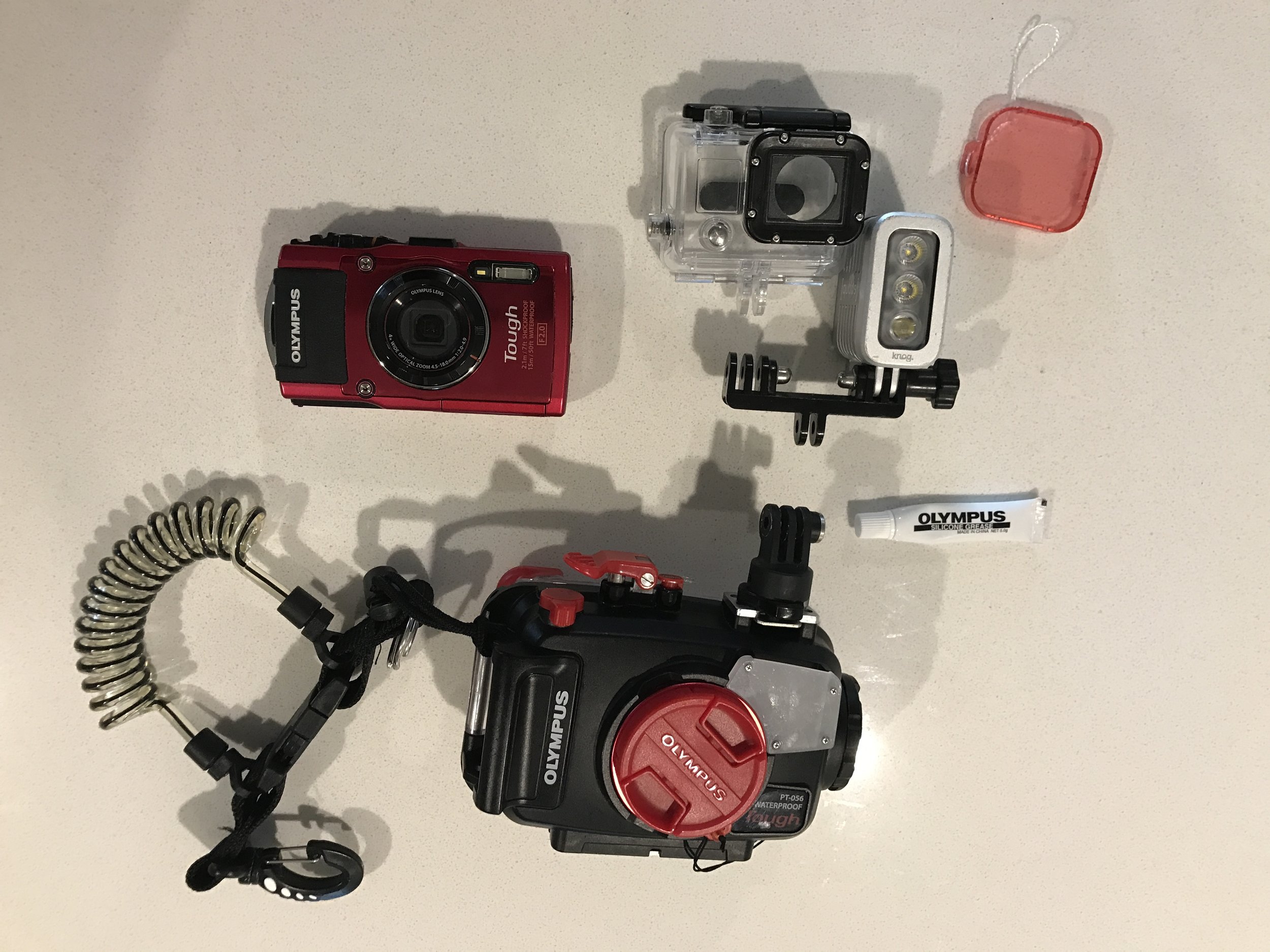
THE ENTIRE UNDERWATER CAMERA PACKAGED, OLYMPUS TG4 CAMERA, PT056 UNDERWATER CASE, GOPRO3 BLACK, KNOG LIGHT, RED FILTER

THE ENTIRE UNDERWATER CAMERA PACKAGED, OLYMPUS TG4 CAMERA, PT056 UNDERWATER CASE, GOPRO3 BLACK, KNOG LIGHT, RED FILTER


The heart and soul of my land based picture and video work are the great cameras of the iPhone7Plus. Whether hand held or on a selfie stick - it is never far from me and ready at moments notice to snap a great picture.

EDIT: I wanted to also give a highly honourble mention to LifeProof for their iPhone7plus case. It has taken multiple drops from my pocket while riding my bike, been splashed with fresh and salt water (I'm a diver, always near water) as well as generally added grip to the normally slick iPhone7plus.  I did have a lifeproof on my 6plus in the past and it was horrendous - the design flaws of the locking clasp for the charging door have thankfully been overcome  

However underwater, the two superstars are:

  1. Olympus TG4 Tough Camera - without the PT-056 underwater case it can happily go down to 15 meters, with the PT056 it will chug away down to 40m. Taking simultaneously 16mb JPEG and RAW images as well as 1080p video - I love this camera. I want to get a strobe for it eventually too.
  2. GoPro 3 Black  - with a side mounted Znog Sports light in the ‘cold shoe’ mount on top of the PT056. The GoPro generally is running from the entry until the battery dies (only 45 min.. this is terrible for me). I also use a red filter to compensate for the loss of the colour red at depth. Recently the hard GoPro Case has started leaking slightly during dives. Without the use of toilet paper in the bottom of the case I don't know if it will be remaining in the underwater set up for much longer.

PROTIP: Do not use devices with hard to source or proprietary cables. If they break (and they will) they can be hard to get. My Olympus is one such device. I purchased two cables on ebay before I left - first broke week 4.


Battery banks

Living on an island where the power goes off a number of times a week, I like carrying a full USB battery at all times, whether it is to charge my iPad, my iPhone, my cameras or even my Bluetooth keyboard. Currently, I carry one and leave one on charge swapping on a daily basis. Alternating between a no name, 2 USB port 10,000mAh or a large 20,000mAh quick charge capable no name brand white brick. There is always one in my bag. Having the ability to charge everything and not slow down has been fantastic. I now only plug into mains power at night - mainly to charge the batteries.

Sharing &  staying connected  

While wifi is available in almost every eating or sleeping venue on the islands, wifi doesn't crack more than than about 3mbs shared across all the other users in each hotel. This lead me to investigate the large data packages available for 4G that is accessible on the islands. I stumbled across a 48gig package (Aug2017) by XL for 270,000rp for 30 days. This has been my lifeblood connection - uploading daily for instagram, emails and normal web browsing. I often tether my laptop to my phone as the 4G is more stable than the wifi.  

DiveMaster life - post graduation

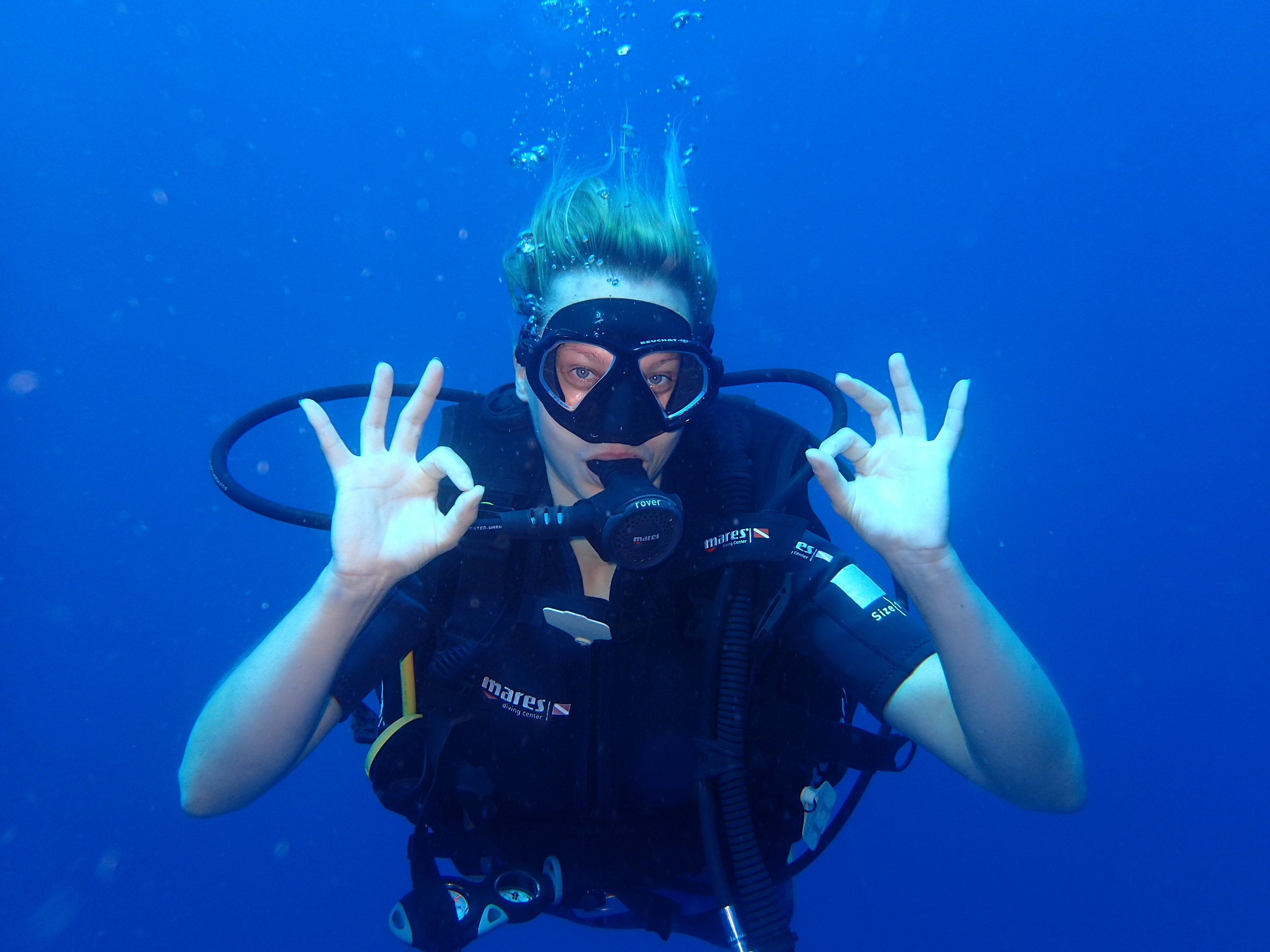
My first decent underwater selfie


It has now been a couple weeks since I graduated as a DiveMaster here on Gili Air, Lombok, Indonesia.

Another Amazing Island Sunset

I was able to spend a week in Bali last week at Mum & Dad’s house using all of their WIFI and hot water - things that are sorely lacking on Gili Air.

My feet! After the shoeless life on Gili Air they needed work!


Now I am back on the Island, my days have been filled with helping out in the shop as well as tagging along as qualified DM to assist Instructors with students who require assistance as well as taking photos and videos to share with you!

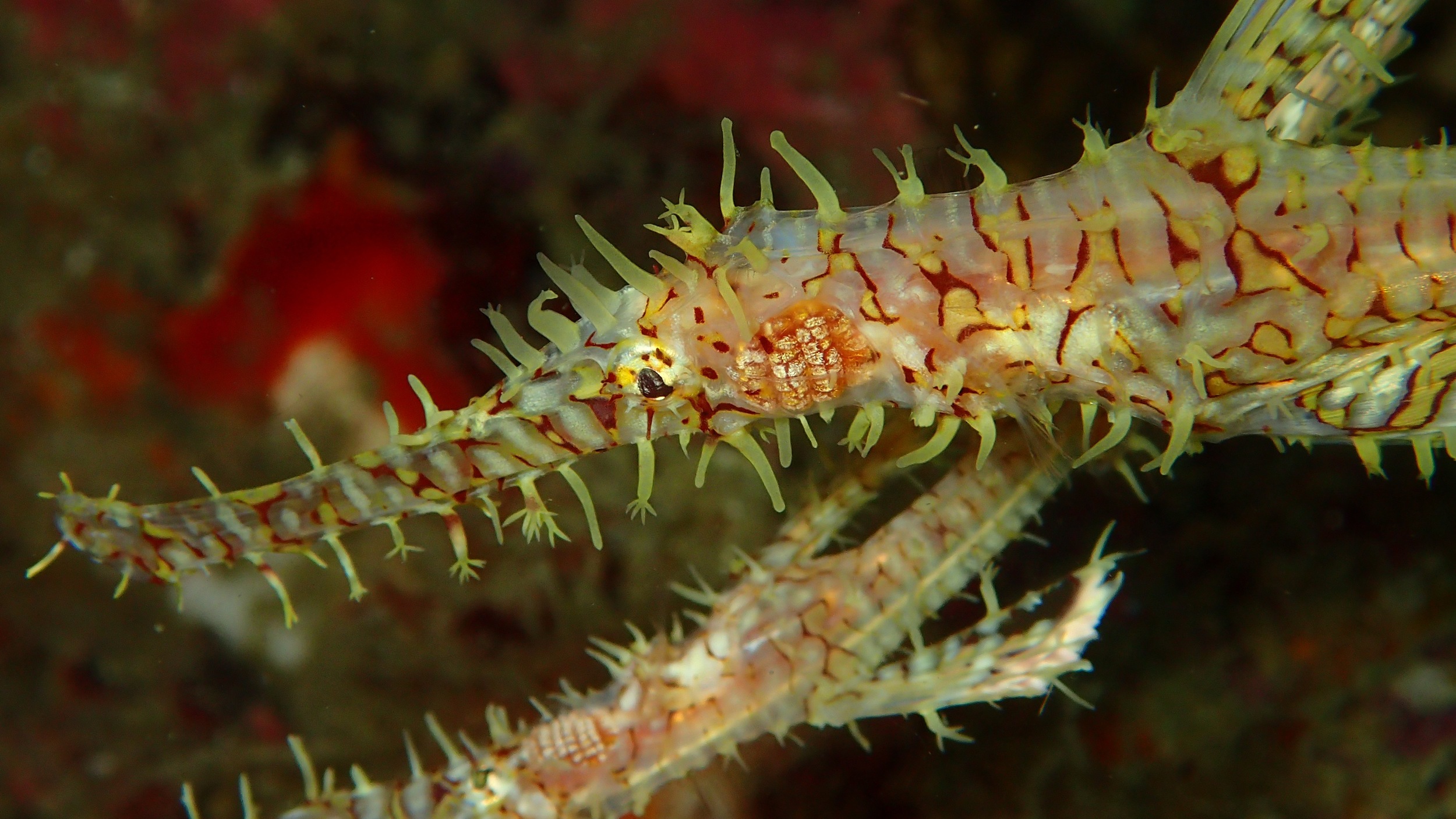
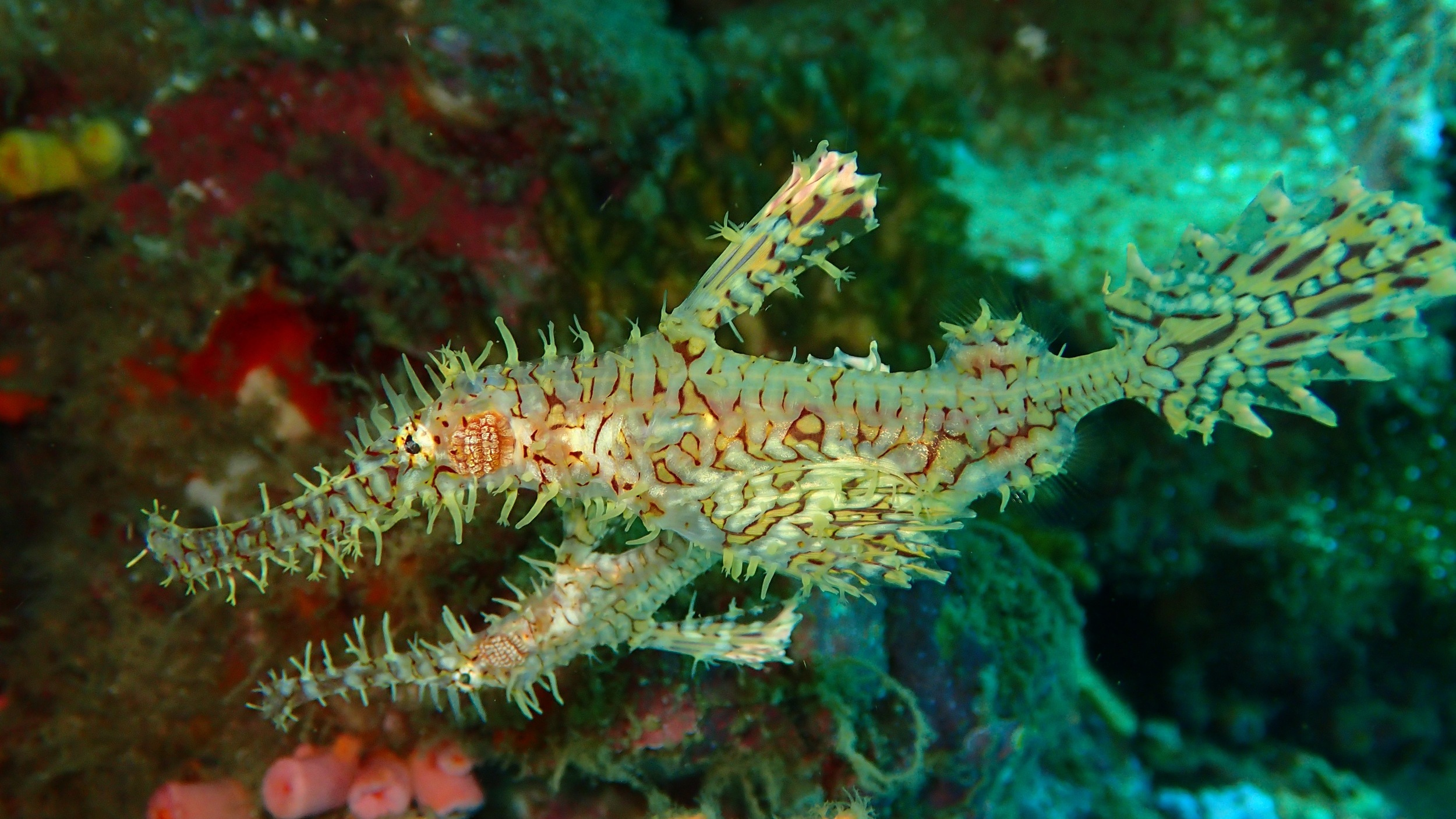
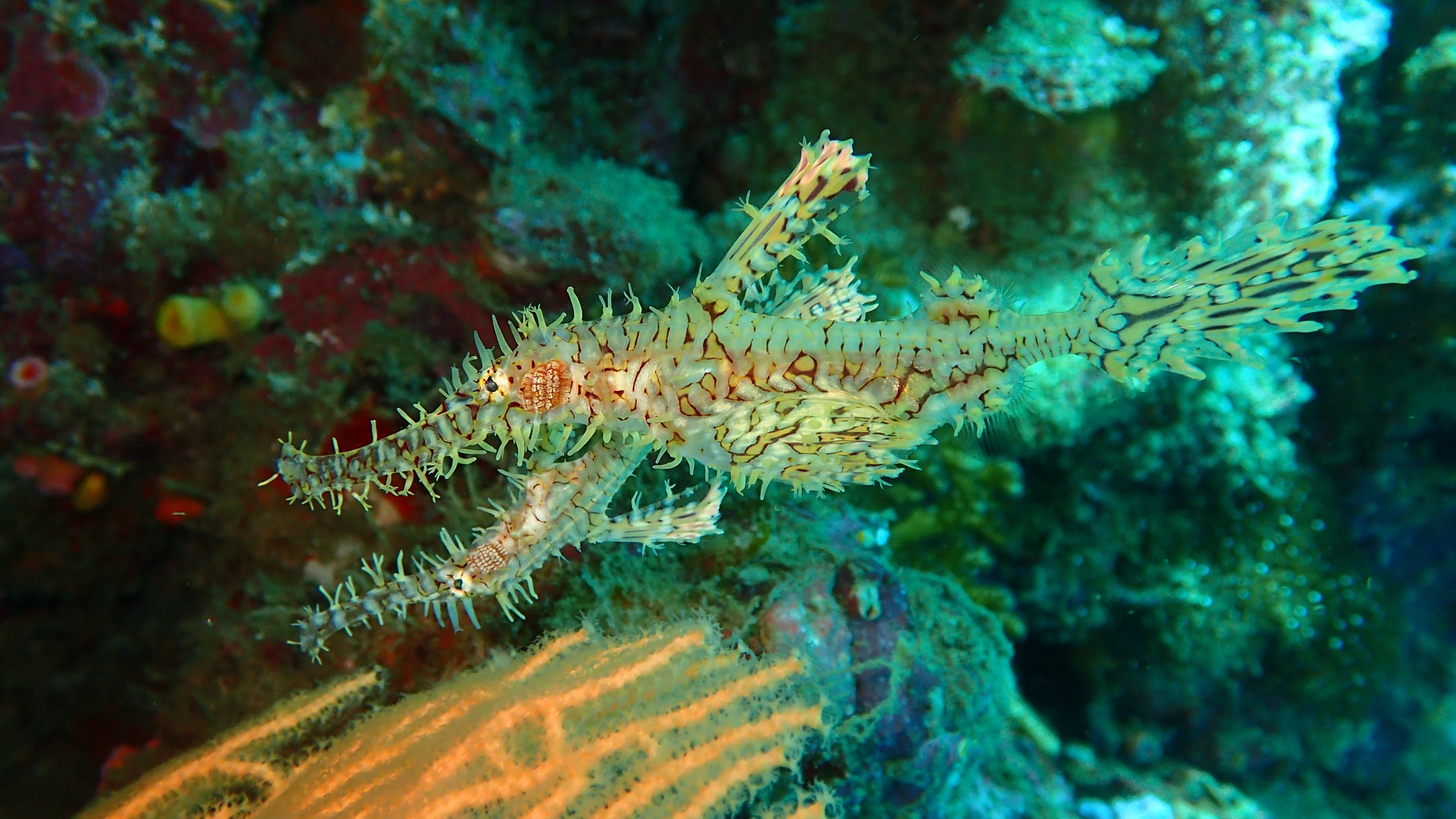
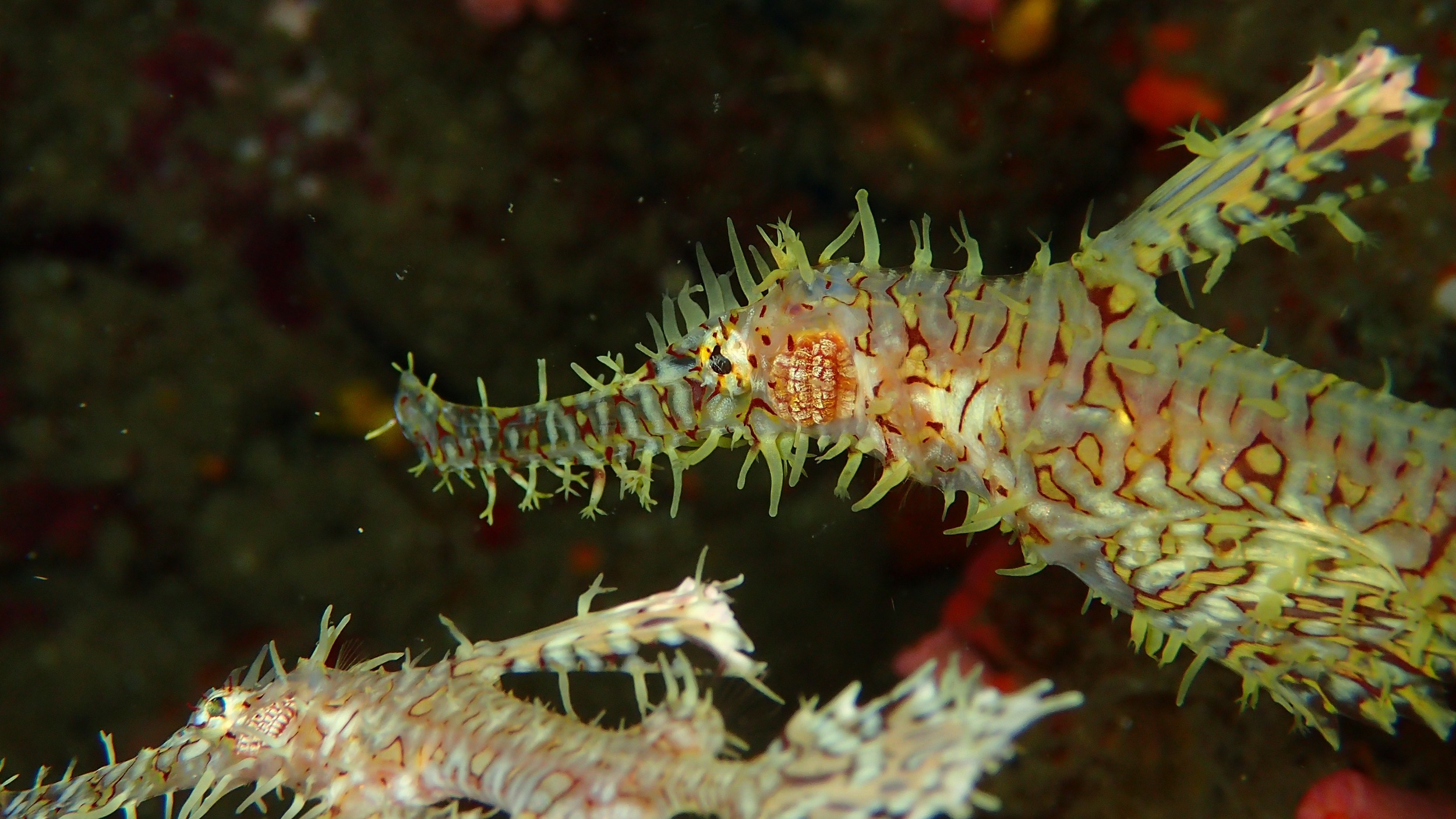
Ornate Ghost Pipe Fish

I will be posting a series of blog posts in the coming weeks about Island Life and things that people should be aware of when traveling / living long term on Gili Air, Indonesia.

Dive Master Week 5 - Gili Air - Indonesia

Wow time is flying fast now I can’t believe it is now 5 weeks since I started the DMT.

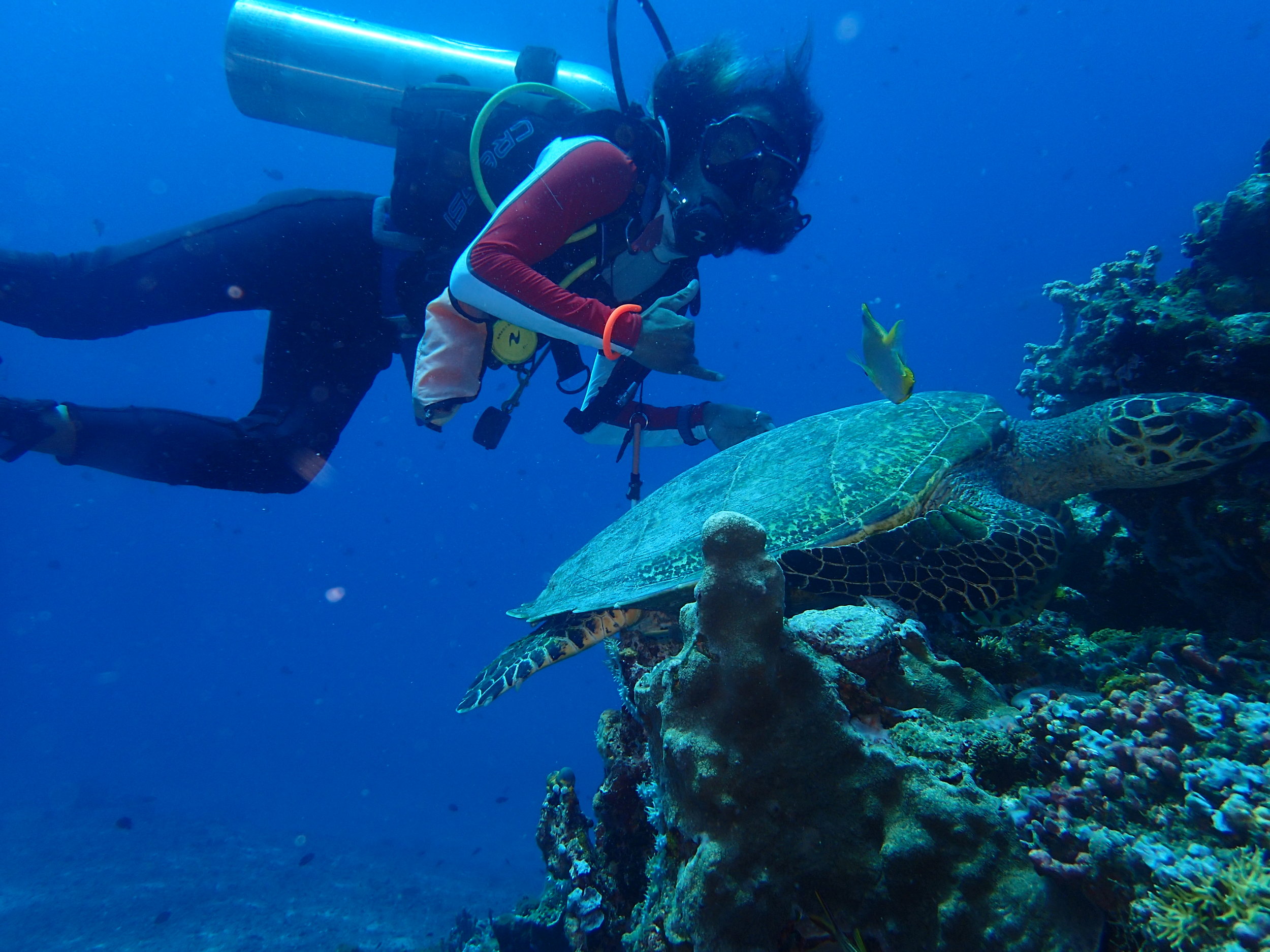
Local Dive Master Soni with one of our local turtles on Hans Reef

Local Dive Master Soni with one of our local turtles on Hans Reef


I have ticked over 100 dives - and no the 100th dive was not naked as is usual convention because I was with clients.


This week I have had a number of firsts - seems to be happening a lot:

IMG_3142.JPG


  • First UV night dive - Half the dive is using normal white light and then we switch to a blue light that simulates UV light which coupled with a yellow mask filter creates awesome reactions from coral - only a tiny proportion of fish react with UV light so they mostly appear black.
  • This week also saw me brief and guide 2 customers on a local fun dive. We went in search of sleeping white tip reef sharks on a site that they are regularly seen - Sunset Reef. Sadly they were not spotted, however we saw a school of 5 line snapper torpedoing as well as a hawksbill turtle munching on the coral. When I told the customers after the dive that it was my first - they said they were very impressed.
  • I am really starting to enjoy my assisting role while assisting Discover Scuba Diving programs. I seem to have developed a knack with divers that are struggling to equalise and risk ending their dive. I manage to calm them, and show them - underwater - techniques to relax and equalise their ears.
P7010021.JPG


Ramadan has come to an end so shops are returning to their normal opening hours and dive masters who were not diving during ramadan are returning so I am looking forward to learning from more of the local DMs


As now been in Indonesia for almost 6 weeks including staying my parents prior to commencing DMT I am now at a point I need to extend my visa so that process starts soon too.

A look at week 5 of my PADI dive master traineeship on Gili Air Indonesia. Check out more on wadeabout.com Facebook.com/wadebout or instagram @wadeabout.

Dive Master Week 3 - Gili Air - Indonesia

FullSizeRender.jpg

To recap week 2 my physical learning pack arrives, I made a start on a few of my assignments - site mapping and emergency procedures, as well as some pool time working on my demonstration skills for underwater teaching.  


This week I have been able to assist our two in house instructors on their courses. In particular my role is starting to form on Discover Scuba Diving (DSD) programs. A DSD is not an actual course more a program that give a first time diver enough skills in the pool to be taken out under guidance onto a 12m deep reef and, as the name suggests, discover scuba diving. Many go on to undertake the PADI Open Water qualification - the first of many steps on the diving ladder.  My role is the provision of an overwatch / safety role to assist the instructor in keeping the group safe while exploring the site

IMG_2304.JPG

Also during week 3 I undertook 3 of my assessment tasks:

  1. Timed 800m Snorkel swim (no hands used, head not leaving the water)  in the picture below that equates to 8 laps with a slight current one way: 3/5
  2. 15 minute tread / float in water too deep to stand, with hands out of the water in the last 2 minutes 5/5
  3. Perform the role of dive master on our dive boat during a fun dive - provide the boat briefing, outlining the safety and comfort features, introduce the crew and dive professional staff as well as monitor the air and time both prior and post for each diver. 5/5


Also this week I was able to accompany qualified divers on ‘fun dives’ with some of our local guides to see often overlooked areas of local sites. It is from these local guides I can learn to hone the craft of fish and marine life spotting, group management and guiding around under water sites including the wreck of the tugboat Nusa Glenn seen in the pictures here (my new fav site)

IMG_2366.JPG

Dive Master Week 1 - Gili Air - Indonesia

I have not been online much this week - as you will see I have been too busy!

IMG_1904.jpg


I arrived after a boat delay, late on Monday afternoon. After making my way to the dive center by horse cart I met the staff and crew. 

IMG_1871.jpg


Later that night I viewed a number of available homestay type rooms. Bedroom with bathroom and outdoor shared kitchen. 

IMG_1889.jpg


I have also purchased a bicycle - the main form of transport on the island. For the cost of 6 weeks rental I purchased one - a massive investment of $70AUD. 

Oh. And I think my bed has bed bugs. So next task is destroying them- all 

This week I have also done 10+ dives, following dive groups, observed regulator servicing, learnt how to use the refrigerated (air dryer) compressor to fill tanks and been working on my underwater marker deployment (DSMB). 


The journey begins!

It has been months in the planning, with daily countdowns starting well into the 80s.

IMG_1744.JPG


With my dive gear is packed, my drone and filmmaking gear and clothes tapped out my 20kg baggage allowance to jamming all my stuff in my bag has been a challenge in itself. 

Just to remind you about the purpose of this trip - After 10 years with my employer, i am now eligible for 3 months paid leave, with the option of taking that at 1/2 pay.  I am using my allowance in one whack and heading to the Island of Gili Air, Indonesia to "study" for my PADI DiveMaster qualification. This can be done in as short at 6-12 weeks.  Obviously I am in no rush to get the qualification, so will work with my instructor. There is a possibility of also moving on to do my Instructor qualification. 
 

For those that don't know, Gili Air is a tiny island off the coast of Bali, Indonesia. The island is so small there is no motorised land transport, instead of get around on foot, bicycle or small horse drawn carts. 


Ep01. Starting the journey to PADI DiveMaster in Indonesia

A view from my classroom

A view from my classroom

As a first in the of a new YouTube series I am hoping to share the process and excitement of not only moving and living on Gili Air as well as becoming a PADI DiveMaster.  

The count down is on for May 2017.

Subscribe to keep up to date with the process! 

 In coming weeks there will be episodes covering what I am packing, where I am staying (and living) as well as the study side of a Dive Master course 


TRAVEL: Our taster cruise for 3 days on P&O

Frankie convinced me to try a cruise up the east coast of Australia for 3 days departing from Sydney. 

I have to say the good (apart from the on board 5 start booked restaurant) the food left a lot to be desired. 

Anyway. Check out the video. Let me know what you think  


TRAVEL: Labuan Bajo, Indonesia


Flying east from Bali, Indonesia across tiny islands ringed in gold and turquoise, over fishing villages and mountains you come in to land over yet another cluster of islands into Labuan Bajo airport, new, white and shiny. Soak it in. It's the newest building in 'Bajo! 


Straight away I noticed the striking difference in the faces of the Flores people compared to the Balinese and Javanese. They look almost exactly like the Timorese - Big wide smiles. Slightly curly hair. It felt so comforting. Reminding me of my time in East Timor in 2008. 

Uploaded by Wade Smith on 2016-04-02.

'Bajo is a growing port town and also the gateway to the Komodo National Park. The national park is a magnet for divers and adventurers alike. 

We specifically went to Bajo to do two things. See the famed Komodo dragons and to dive. We spent 7 days in Bajo, diving almost every second day.  A boat trip to most dive sites is around 1-2 hours. Our longest day included a guided walk within the National Park on the island of Rinka, a neighbour to Komodo. On the small island is a ranger station where the rangers live and base from - they have two main roles. Act as walking guides and to show the dragons The Rinka dragons are about 1/3 smaller than Komodo's due to evolution. Rinka's giant lizards are still 2-3m long. Our guide cheerfully informed us that they climb trees until they are too big then just hunt on the ground for small deer, birds and other Frankie sized prey. 

A day trip to Rinka can still fit in two dives later in the day however a trip to Komodo is about 5 hours one way from 'Bajo. With time not on our side as well as a hunger to dive in one of Asia's greatest sites - Rinka it was. 

Diving:

I can't talk about 'Bajo without talking about the diving. The best way I can describe the life around the national park - Prolific and Jurassic Park-like. Every fish, every Turtle, every Nudi was bigger, brighter and totally amazing.

We stayed with Blue Marlin in Komodo - can not recommend them as a dive company and lodging more highly. Loved it. 5 stars for me.

Check out my other travel posts : Here

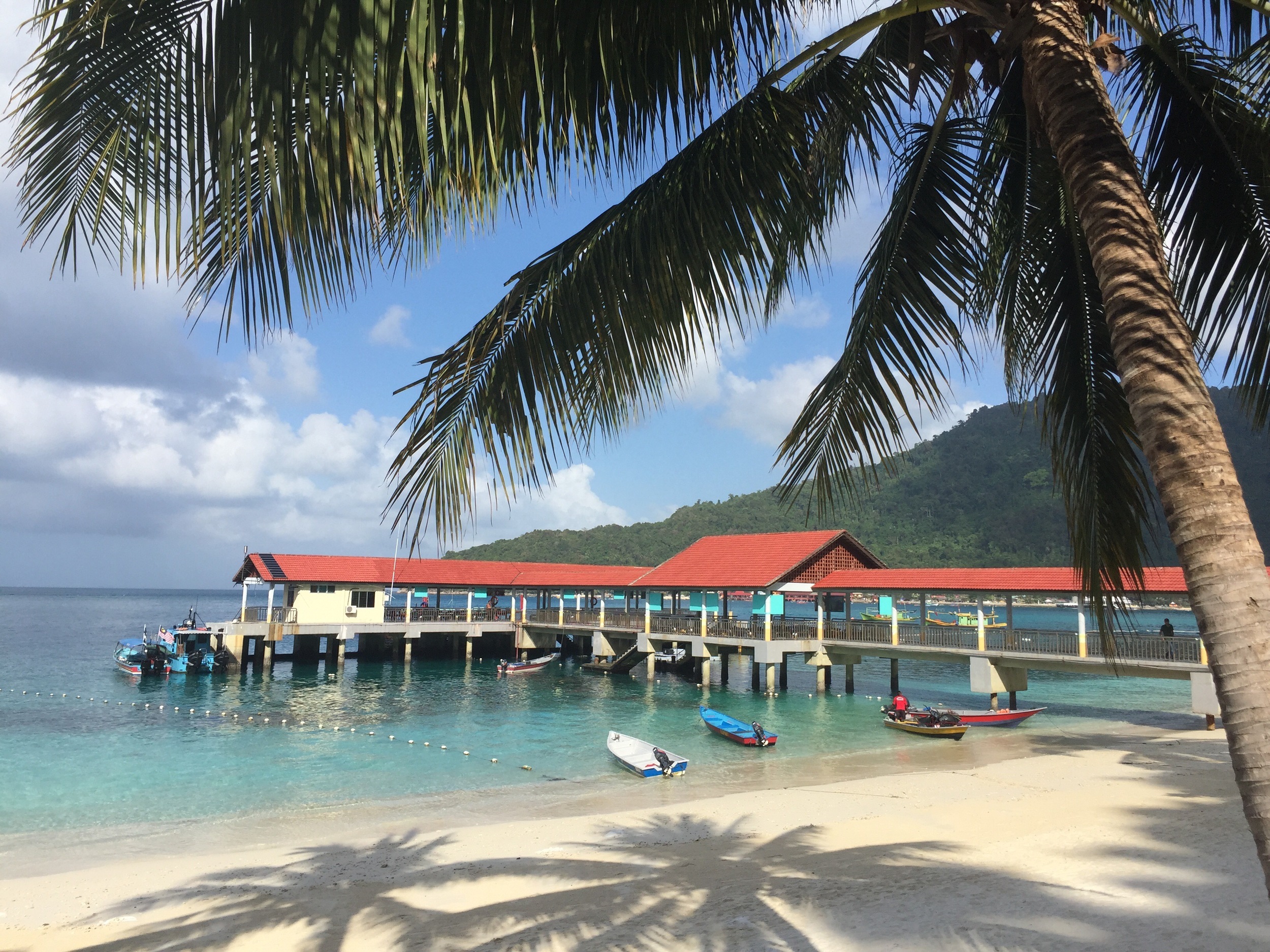
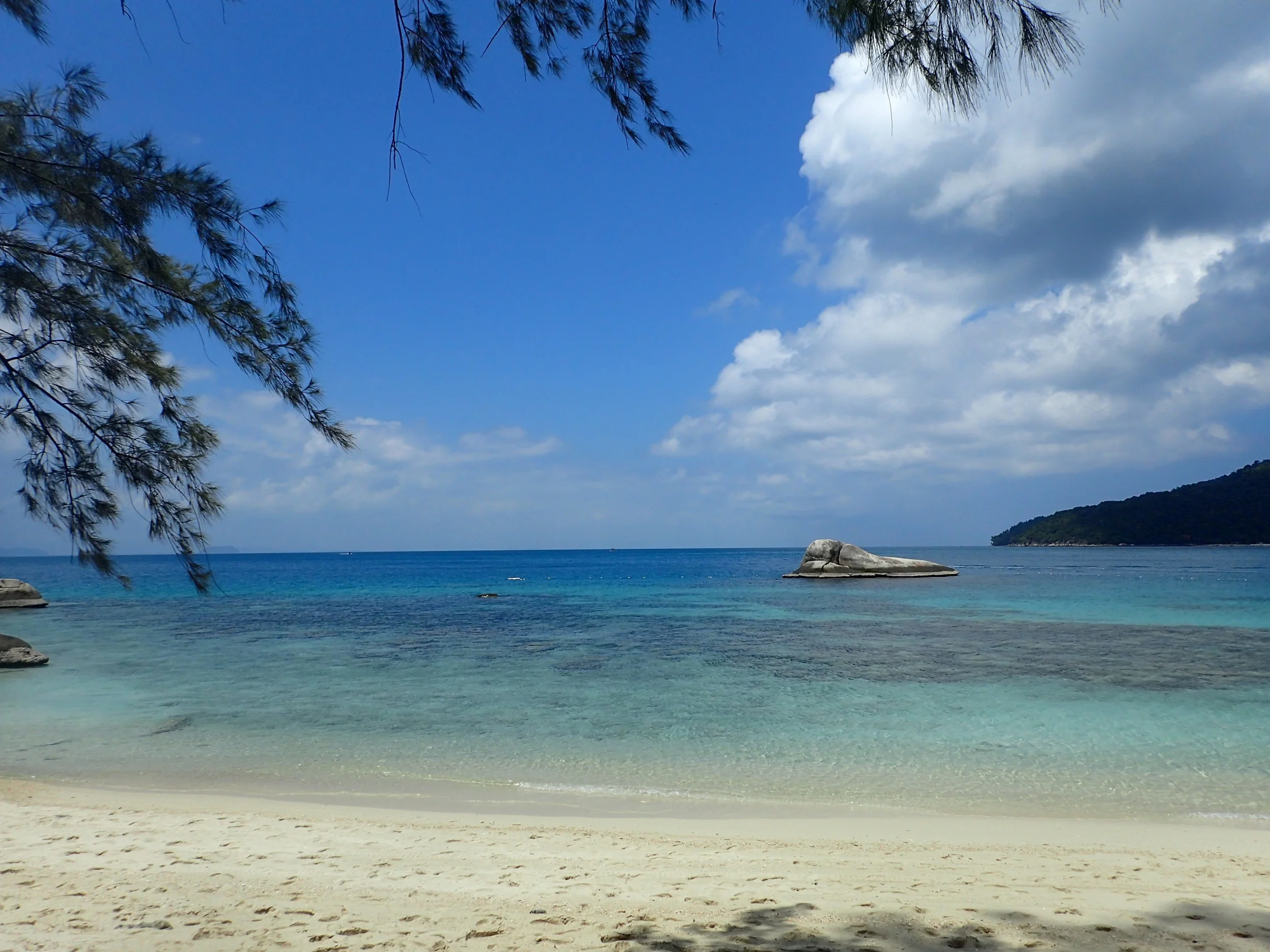
Perhentian Islands, Malaysia

Getting there 


The Perhentian Islands are approx 25km off the north east coast of Malaysia, just south of the Thai border.

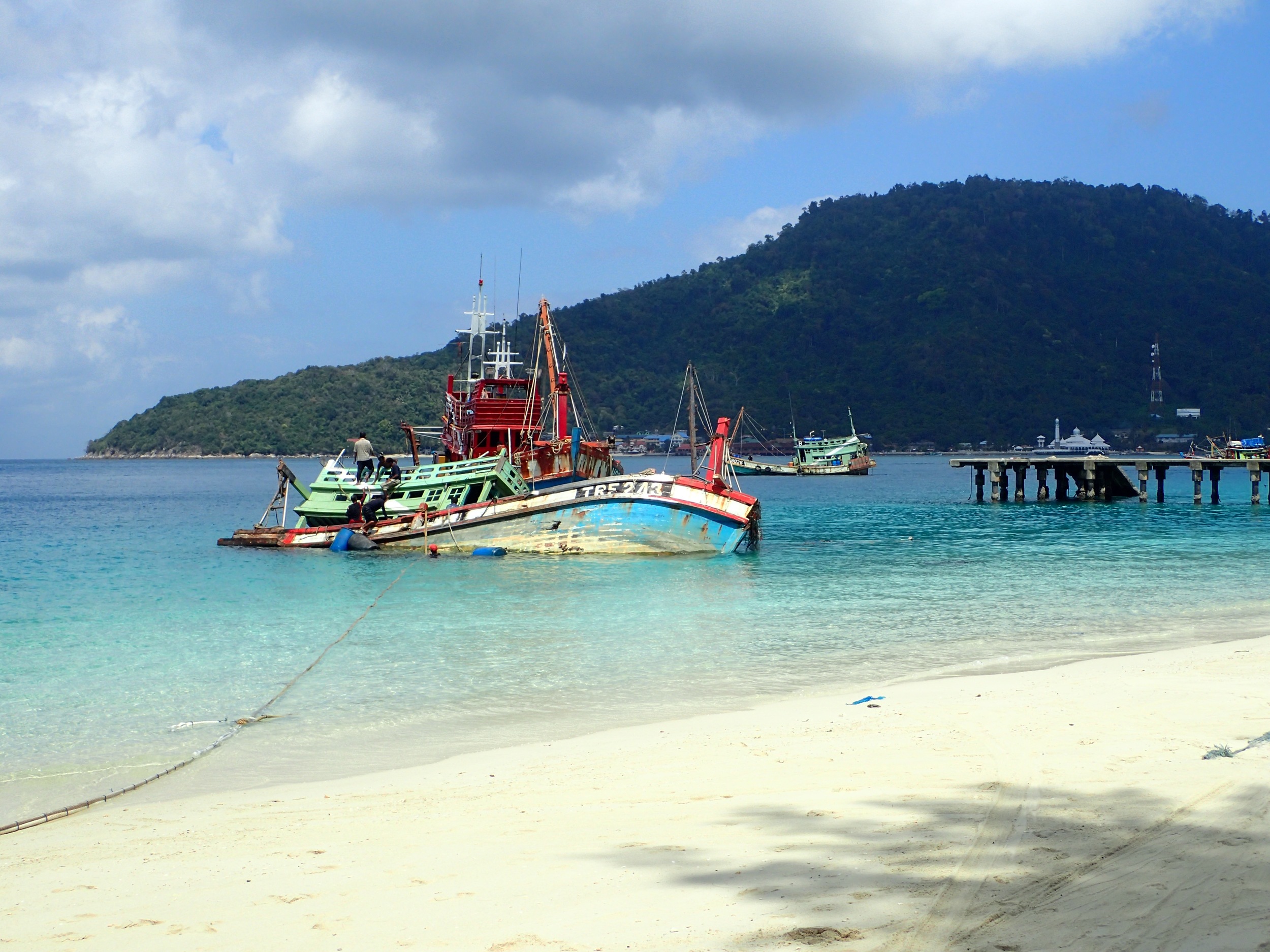
Flights are multiple times per day from Kuala Lumpur to Kota Biru, the nearest mainland airport. Then it is a 60km drive to the coast with any one of the friendly local taxi drivers. Before you depart KL, it is advisable to call your accomodation on Perhentian and confirm boats are operating to the island that day, particularly early in the season. We were caught out a bad weather front swept through as we arrived and no boats were operating.

Boats are either booked by your accomodation or tickets purchased at one of the local Kuala Besut ticket agents.

The boat ride from Kuala Besut to Perhentian is approx and hour. If the sea is rough be prepared for a bumpy ride.

Where to stay

We stayed on the ‘big Island’ Perhantian Besar at Abdul’s Chalets. Abdul’s afforded the best mix of location, privacy and quality.

Abdul’s has its own ‘home reef’ located within a roped section for snorkelling away from boats. Many other shallow reefs are within a 15 min walk of your front door.

Large parts of the big island are accessible only by boat and the hotel is more than happy to organise for you.

What to do

Anything in the water!

Perhentian is set up for watersports, be it scuba diving, snorkelling, turtle spotting, or relaxing on a beach.

Highlights

Calm water frontage

Lowlights

Not being told by our hotel that there was no boats operating, leaving us stranded in Kuala Besut - check with your hotel (particularly in shoulder season) about access.

Don’t forget to bring

Sunscreen and a towel

We spent a week on Perhentian Island Malaysia during their early season.

Quick update on the Van

It has been a busy few months working on the van.  The interior is almost up to scratch with the covers for the mattress being the only roadblock before its first test.  


The front windscreen that was cracked from left to right because of a rust bubble has been removed and repaired.  


Brand new windscreen! 

Brand new windscreen! 

The last piece that I am looking for to make it perfect is a side awning that does not require roof racks. This is proving to be more ellisive than I had imagined.   Any ideas?


Side awning needed  

Side awning needed  

Introducing our new project - a 1998 VW Transporter T4 - I guess we are joining #VANLIFE

A while ago I wrote about #projectsailboat. This was a desire to learn more about the “systems” of a boat prior to purchase. Such as a means of producing power (solar), storage options in limited space etc. Greater discussions with my partner led us to move away from the idea of a boat - we simply would not get the use of it, being some 150km from the ocean. The next option was a camper - we enjoy camping and exploring but due to weather this limits our options. A camper would extend the 'season' as well as offer a support vehicle for scuba diving. After much searching we settled on a relatively old 1998 VW camper van. It had been roughly converted - allowing us to add many of our own touches. The video below gives you a look at the van after we have had it for only 2 weeks.

A tour of our tour of our 1998 VW T4 including the 12 solar set up. We have had this van for 2 weeks. Also featuring my mum's knotted slippers to cope with working in my garage in a Canberra winter. Please comment / like / share below.


Check out the video and don't forget to like, comment or subscribe.

PROTIP: Why having mobile data can ruin a holiday

No coverage 1
No coverage 1

I know it is an agreement that most people would assume is 180degrees from my normal position, but here it is - Having a mobile internet connection definitely negatively impacted on our holiday.

This trip was very different to the 2013. During our time in Myanmar in 2013, there was 1 mobile provider with expensive access (a sim card alone cost $100 AUD). However this time, there were at least 3 providers with relatively cheap - including sim and 5gb for approx $30 AUD.

How did it negatively impact the trip? I hear you ask. It was not until we were in Myanmar, after having travelled to Langkawi, Kuala Lumpur and Genting Highlands in Malaysia that I realised I was spending a lot of time looking down (at my phone) and not up and out.

Maybe it is just me, but I suspect it is a wider concern for people around my age, especially in the west. We have almost instant access to anything we want online, usually via the screens of our mobiles. This post is not meant to be a mobile bashing piece, but I did want to highlight what I missed out on.

I know within myself that if I am going some where that has no connection at all, that is totally fine, I prepare. I lived in East Timor for 6 months in 2008 which when you said you had ‘good internet’ meant that you did not have to share the dialup connection with 4 others. Also mobile data was unheard of. I can cope with that - for a period at least. My issue is when there is a hint of connection, a fleeting blip of connection, I become obsessed with getting the news, Twitter and Facebook on that tiny connection.

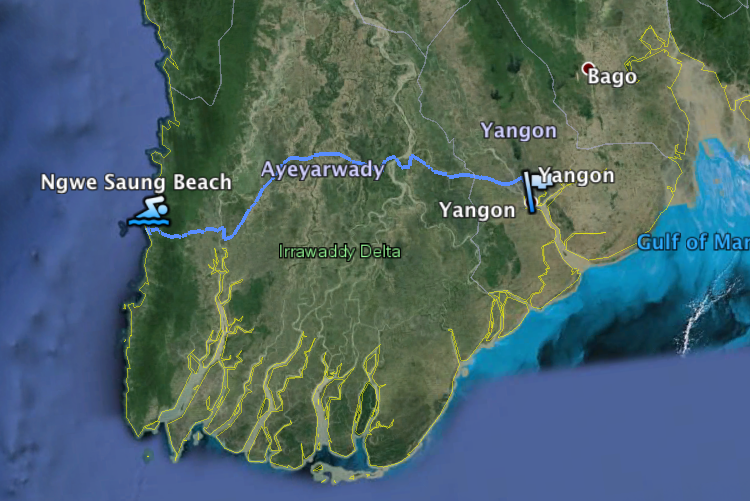
This was the case during the 250km, 5 hour car ride from Yangon, Myanmar to the very west coast at Ngwe Saung Beach.

Looking back, it was an issue totally of my making. I was excited to test out one of Myanmar’s new carriers along with staying connected.

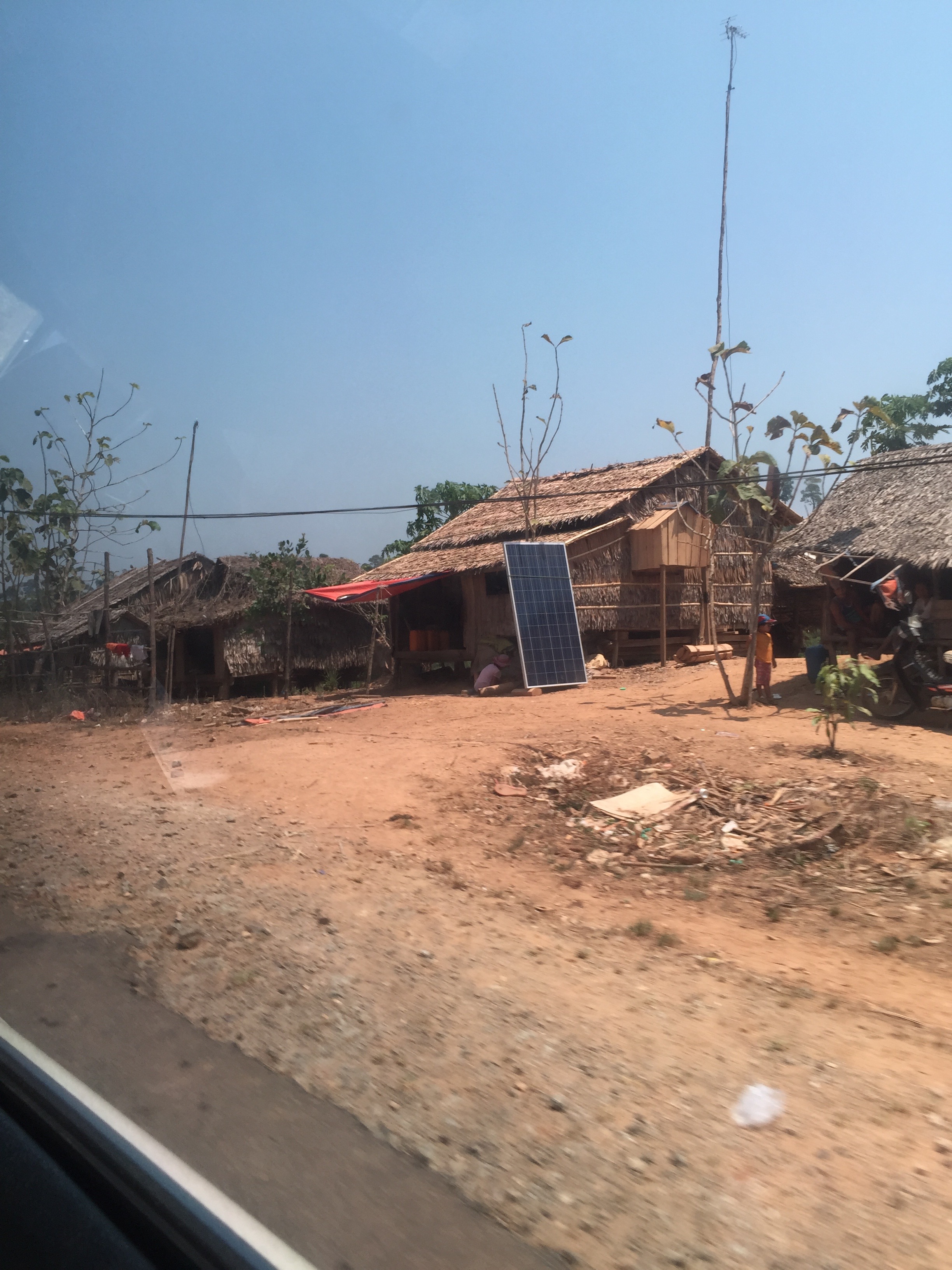
I missed out on bonding with my fellow travellers, along with seeing the countryside change as we moved from the lush Irrawaddy Delta into the dryer west coast. Seeing villages that have never had mains power connected, yet use 150w solar panels on top of their palm-fron roofs to power lighting and in some cases a 12v TV to watch football.

IMG_5030
IMG_5030

Tips for offline travelling

These are some if the things I have done in the past that have helped me enjoy travelling with while remaining offline

  • PODCASTS

If you haven’t already gotten into podcasts, you are missing out! Podcasts are downloadable audio clips. Usually radio segments or audio blogposts. For travelling I prefer things that won’t date. So I don’t listen so much to my nightly news podcast from home, rather I listen to a science or history podcast.

iOS has a podcast app built in, however I prefer DOWNCAST and have set it to only grab new episodes while connected to wifi.

Some suggested long form or serial type podcasts include

SERIAL

FINISHING LINE

STUFF YOU MISSED IN HISTORY CLASS

  • EXTERNAL POWER

We have all seen them, those zombie like creatures that are huddled around the one or two powerpoints in airports and bus stations. Don’t be one of them, seriously just don’t.

Fortunately I was travelling through Asia, with its huge electronics markets and picked myself up a 20,000mAh external battery, The size of a small shoe can be a downside, however I can steer clear of a powerpoint for days. A 5,000mAh would do most people, I am not most people :D. You can read more about my battery obsession here.

  • OFFLINE READING

I am always seeing videos, news articles or blog posts that I think “I would love to open that, but I just don’t have time at the moment to watch or read it now”

Well that was before Pocket came into my life. it downloads all the text from a post along with the embedded pictures for offline reading. I smash this every time I am flying or laying on a beach reading.

Coupled with free services like IFTTT you can even set up rules for social media such as “ Every time I fav a tweet with a link, I would like you to save it to pocket for reading later” which is a personal favourite of mine. As for videos, you still need to be online for those, however you will not lose them.

  • REMEMBER YOUR PHONE IS MORE THAN AN INTERNET PORTAL

There are so many undervalues apps and features that work fine offline and are a lifesaver for travellers. Whether it is offline google maps for Android, or HERE offline mapping in iOS, your camera with geotagging, watching movies that you have pre transferred.

With a little planning ahead there is no need for mobile data and no need for mobile data to eat into your holiday

If you like my content please also like my facebook page facebook.com/wadeabout

Help fund more content you can shout 1/3 of a beer each month at http://patreon.com/wadeasbout

W: wadeabout.com

T: wadeaboutblog

YT: wade85

IG: wadeabout

Thailand: Scuba Diving Koh Phi Phi from 3 angles

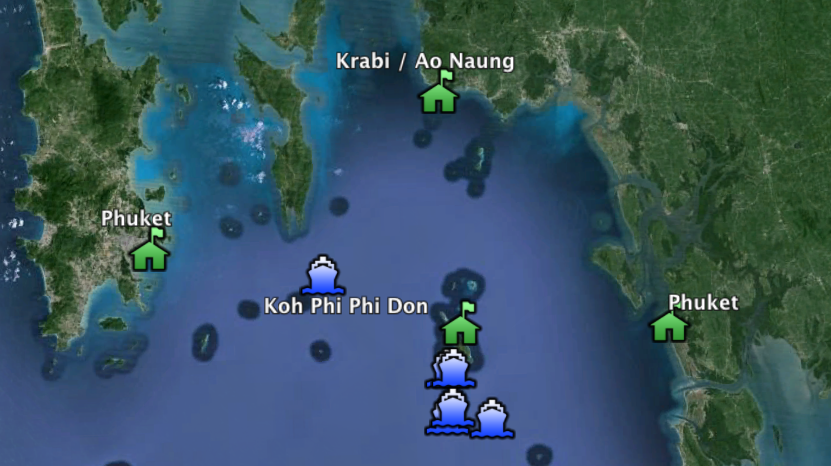
During our recent visit to Thailand I was fortunate enough to dive some of the most amazing places. Funnily enough they all centred around Koh Phi Phi Don in the middle of the Andaman Sea

I did not know this at the time, but the dives from Phuket and Ao Naung both required 2 hours of travel each way by boat. Not as horrible as it sounds as both trips were fully catered!

Having learnt to dive in the cooler waters off South East NSW, the 30 degree tropical waters were a real shock. All the dive guides could not believe ever diving in the cold temps of 18-24 that I dove here.

I will let the images speak for themselves. I will however add - I did not take them. The local dive guides thankfully have far better skills than I and provided them either for free or at a small cost.

The dive shops I dived with, I could not recommend highly enough. There were some shocking reviews on trip advisor about some shonky operators, particularly on Phi Phi Island.

I dove with:

The Dive, Ao Naung

Phi Phi Diving, Koh Phi Phi AKA Phi Phi Island


If you like my content please also like my facebook page facebook.com/wadeabout

Help fund more content you can shout 1/3 of a beer each month at http://patreon.com/wadeasbout

W: wadeabout.com

T: wadeaboutblog

YT: wade85

IG: wadeabout


Langkawi, Malaysia

Langkawi has the best of both worlds - fantastic rainforests and amazing beaches and watersports. A huge proportion of the island is rightfully protected as a GeoPark ensuring protection and eco management. 


How we got there

Langkawi was our first destination after flying overnight Sydney to Kuala Lumpur. A quick transfer to the new KLIA2 AirAsia terminal saw us on our way for a quick 1 hour flight to the beautiful and relaxed island of Koh Langkawi

Things we saw or did

Here are some of the AMAZING activities we go up to:

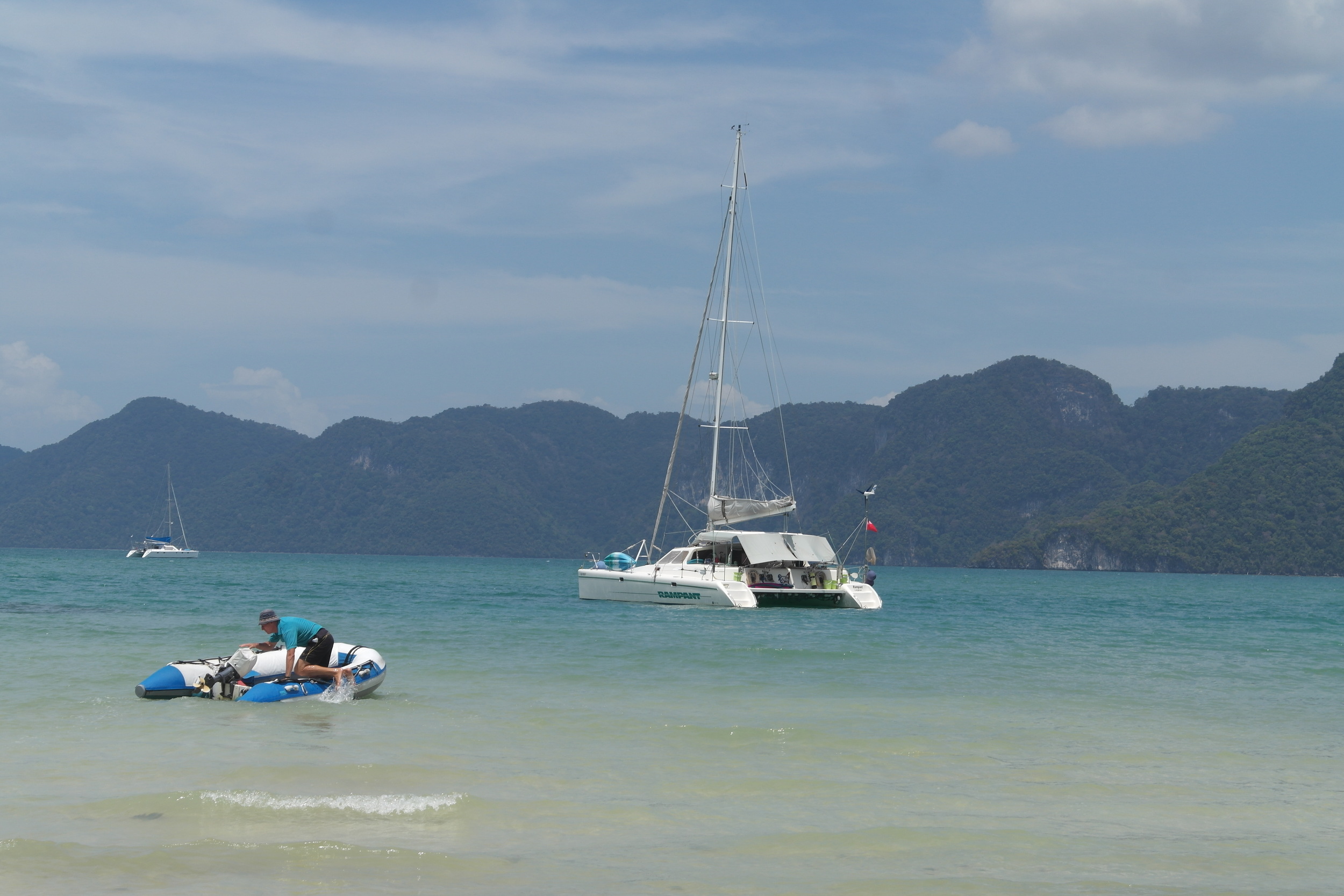
Day sailing on a 40ft Catamaran with Rampant sailing that included laying about in their jacuzzi net behind the boat or laying in a hammock suspended between the hulls while anchored in a protected cove for lunch. Not to mention the open bar on board. Itis not hard to see why these guys are rated as the Number 1 thing to do in Langkawi by TripAdvisor

½ Day kayak tour of the mangroves within the GeoPark including a visit to limestone caves and the fish ‘farm’ located at the base.

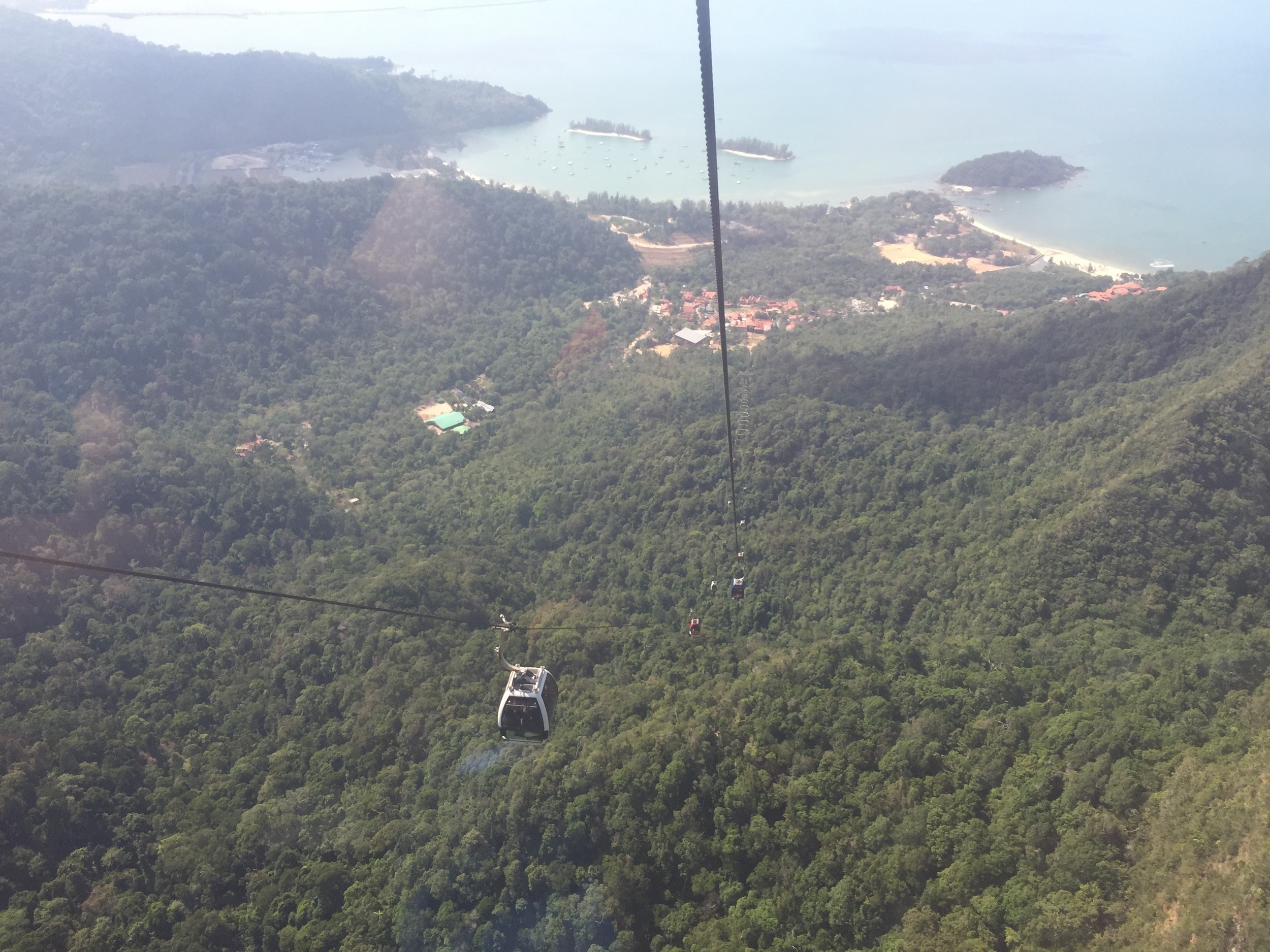
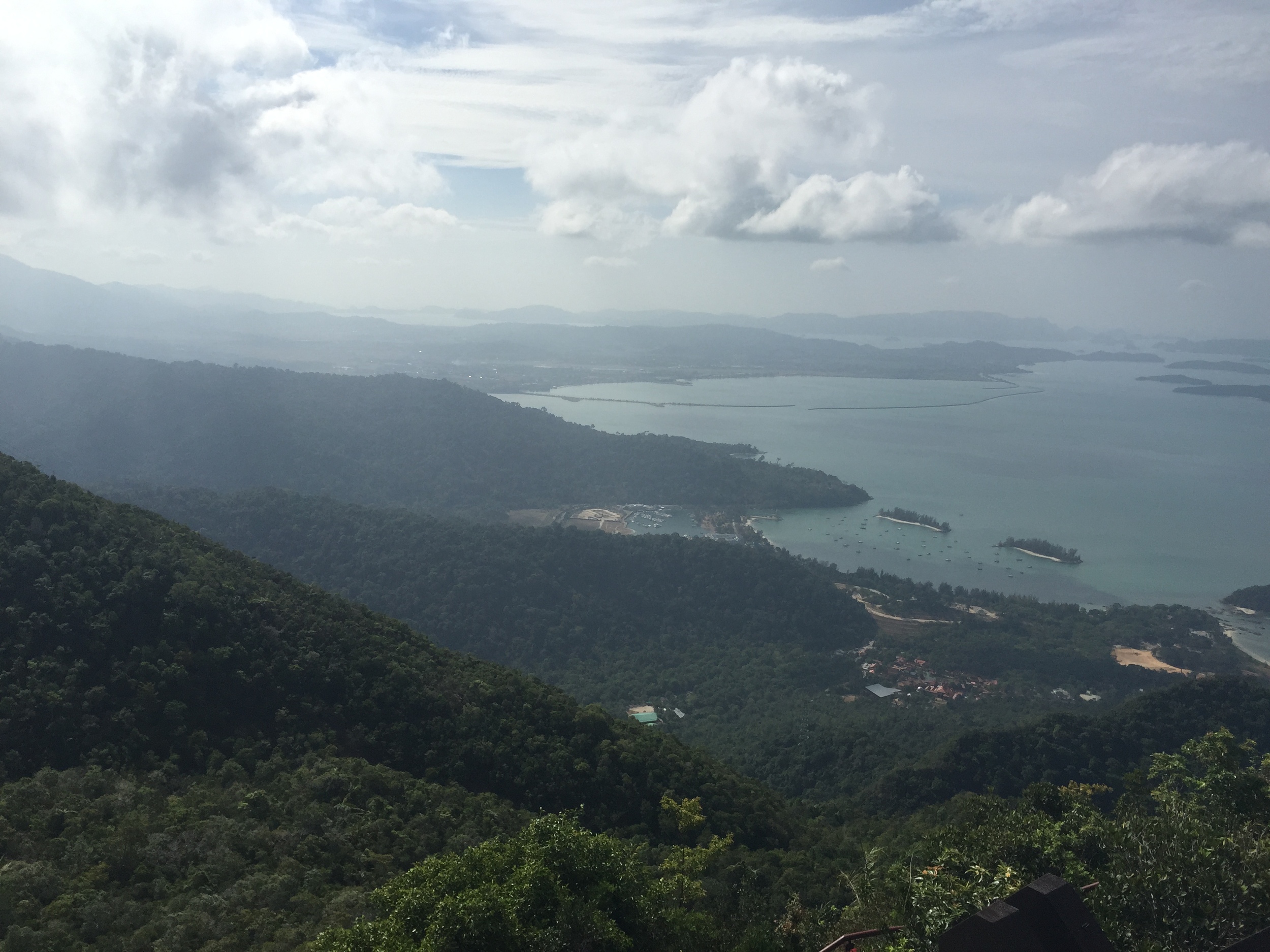
A not to be missed trip up into the rainforest on the Langkawi Cable Car giving you a spectacular view over the beaches and islands.

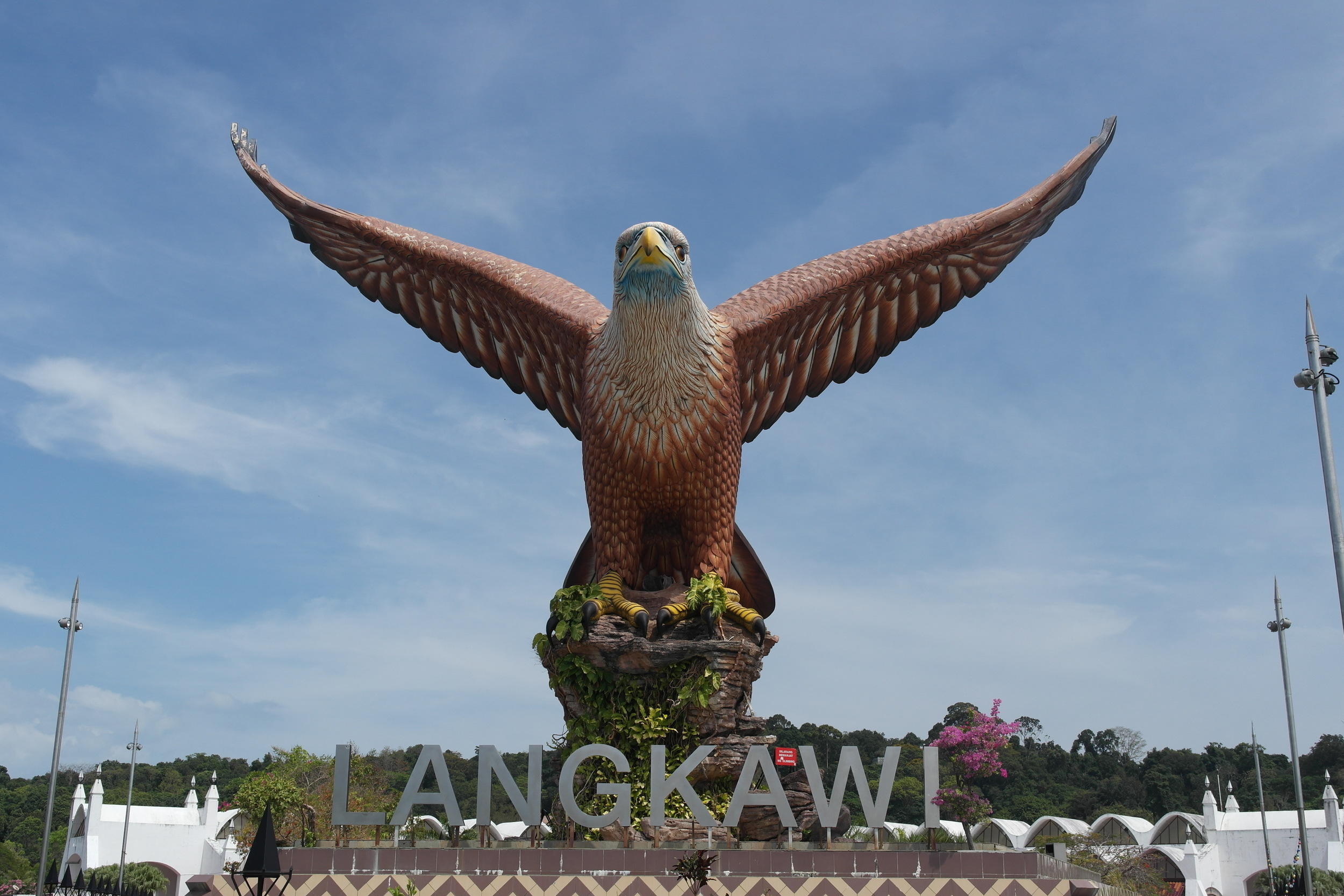
A visit to the state symbol at Eagle Square featuring a huge Brahminy Kite statue.

How we got around

We quickly compared the prices of hire cars versus a scooter for the duration of our trip. The scooter was the easy option as I was licensed internationally and had ridden a fair amount before. Also it allowed us the ability to park just about any where.

Amusingly while refuelling I did manage to lock our only set of keys for the scooter under the seat. Before full panic over took the situation a young local service station attendant with particularly small hands managed to get his hand under the seat and retrieve the keys. A lesson was had and in future scooter keys will be on a lanyard!

Food we ate

As with most South East Asian countries, I highly recommend eating in small local cafes or tea houses and street food where ever possible. This ensures your tourist dollars stay in the local community as well as would provide you with fresh good local food. Being Malaysia, I could not pass up fresh hand made Roti, the local hotplate cooked bread that is eaten with many meals. Langkawi also has a strong middle eastern population so there is no shortage of abab stands as well.

How we got connected

As with most connected travellers, if there is a connection available at a reasonable speed and reasonable price we will connect. Because we have little need for calling while in Malaysia we chose a prepaid provider that would offer us the maximum data available. We used Internet of Xpax that is a user of the Celcom network within Malaysia. One of the benefits was that should be go over our included data we were provided 3 30min windows a day to access as much data as we could use.

I would always suggest buying local sim in each country as it is astronomical the chargers providers from home charge to roam - much less use data. The website below is full of crowd sourced information relating to costs and access in each country.

http://prepaid-data-sim-card.wikia.com

Interesting facts

The entire island of Langkawi is tax free. There is no tax on luxury cars, alcohol, chocolate etc. Think a whole island duty free. Frankie was able to purchase 1lt of Vodka for the equivalent of AUD$10.00

Trailing a new posting style for AsiaTrip2015

As promised, I will be still posting about this trip through Malaysia, Myanmar and Thailand. However I wanted to trial a new style. While other bloggers talk about things to do and see, I will write about the things we have done, places we ate - these are not things written in a guidebook that some one has regurgitated - we actually tried them so can talk honestly about them.

I will be using these main themes with others being used on a place by place basis. Let me know what you thing.

In the mean time head to Facebook, instagram or twitter and search #asiatrip2015 and you will see some of our live postings on those sites.

24 hours  with Lifeproof's new iPhone 6 plus waterproof case - the "Nuud"

IMG_4579-0.jpg

After many months of waiting finally LifeProof has released a limited number of their waterproof iPhone 6 plus case line.

I was lucky to snap one up and express shipped it from the US. It arrived today.

After a few hours use, I made a shocking discovery. LifeProof have made the charging port hideously small. My former iPhone 5’s LifeProof had a somewhat limited size hole but I found a number of cables that fit and made my entire EDC kit around that.

However the iPhone 6 plus LifeProof case will only accept cables “that are originally provided with the product” i.e. the original white cable. I rarely use these cables. They break to often and are too long for my every day needs.  I am now left with a plethora of lightning cables that are only usable for my iPad.

Hmm the hunt is not on for a 10cm narrow cable. Preferably before 27 March as we depart Australia.

UPDATE: on day 3 the two very tiny clips that keep the waterproof door closed over the charging port completely snapped off and were found on my bedroom floor. I super glued them back on, however I no longer have confidence on the waterproof nature of the door. I have requested a replacement from LifeProof.

Count down on for Asian holiday 2015

IMG_45261.jpg


I have been looking forward to this trip for about 18 months. 

This trip will take us to the following amazing places:

  • Langkowi - Malaysia
  • Kuala Lumpour - Malaysia
  • Yangon - Myanmar 
  • Bangkok - Thailand
  • Phuket - Thailand 
  • Krabi - Thailand 
  • Chiang Mai - Thailand


Do you have any places you suggest we "must check out" while we are there ??